On February 28, 2026 — the first day of the U.S.-Iran conflict — American forces struck the Hajar-e-Teybeh girls' elementary school in Minab, killing at least 175, 100 of whom were under the age of 12.
The circumstances behind the strike suggest a catastrophic failure of intelligence. Investigations, including those by Amnesty International, indicate the school was likely mistaken for a naval installation belonging to the Revolutionary Guard Corps (IRGC). It appears the school was once located within the IRGC’s perimeter, but a wall had been constructed between 2013 and 2016 to separate the two. It’s a sobering reminder that while our technology moves at lightning speed, the data it relies on can remain dangerously stuck in the past.
At the center of this incident is the Maven Smart System, a $1.3 billion intelligence and targeting platform developed by Palantir Technologies. The software is designed to synthesize various information streams — radar data, satellite information, drone feeds, and more — to classify and rank potential targets.
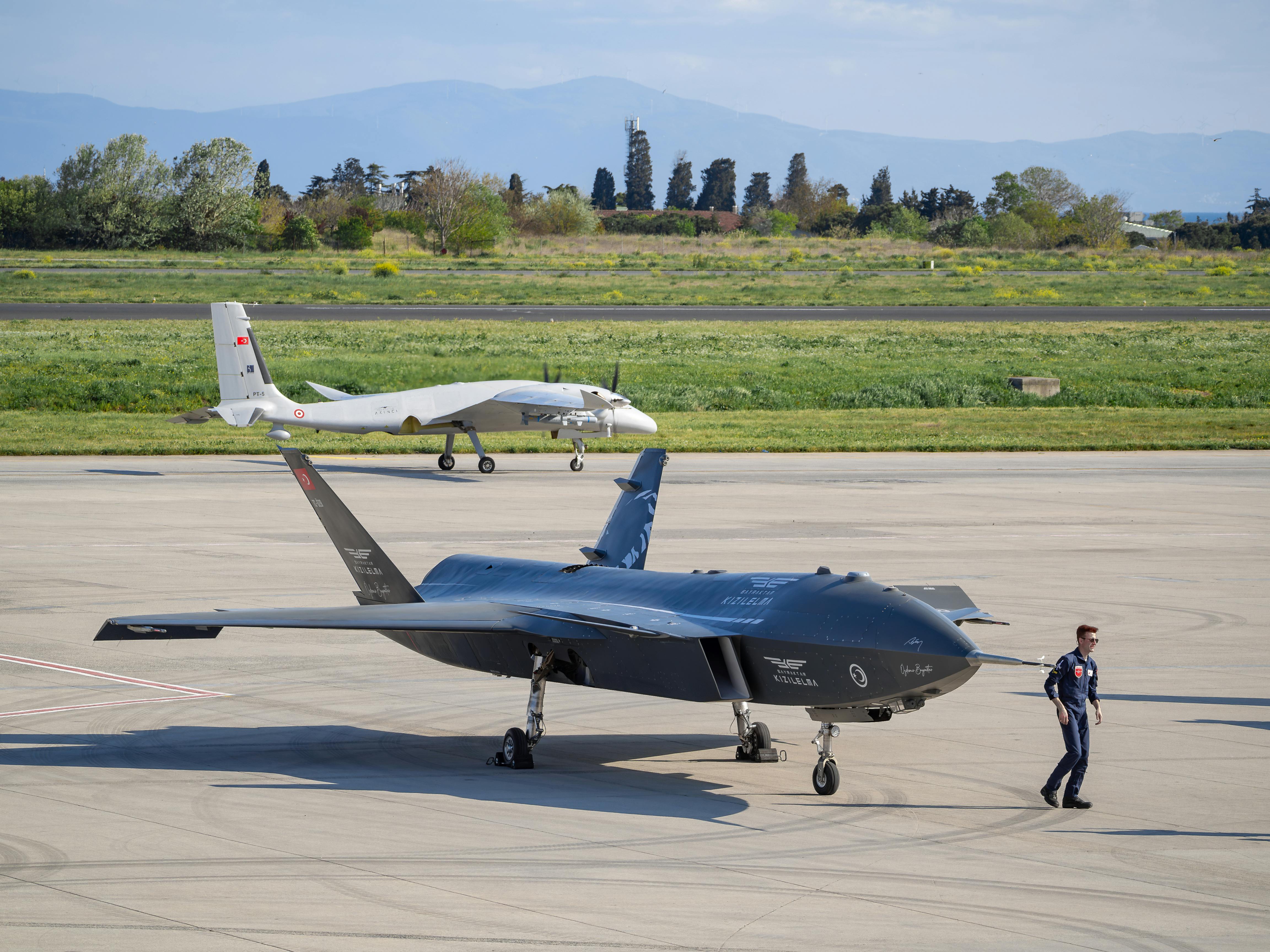
Reportedly, the system utilizes Anthropic’s Claude AI model to provide justifications for these strikes. This level of automation is what allowed the U.S. to hit over 1,000 targets within the first 24 hours of the war, according to the Washington Post. However, in the case of Minab, the speed of the software seems to have outpaced the accuracy of the information provided to it. U.S. Central Command reportedly used coordinates based on outdated intelligence, leading the AI to misidentify a school as a legitimate military target.
Thus, a critical question arises: should the system act on its own, or should a human make the final call?
AI is compressing decision timelines from hours to mere seconds. But in the volatility of defense, speed cannot come at the cost of total control. The future of the industry is a model where AI serves as a decision amplifier instead of a decision authority.
Support vs. Authority
To navigate this landscape, consider the statement: "AI should be allowed to make mission-critical decisions in orbit." The response to this depends on whether one views AI as a tool for support or an entity of authority.
| Level | Function | Human Role |
| Decision Support | AI processes sensor data, identifies patterns (spoofing/jamming), and recommends actions. | Final decision-maker and accountable authority. |
| Decision Authority | AI independently executes maneuvers, countermeasures, or targeting based on real-time strategy. | Minimal or no involvement in the immediate loop. |
The debate is rarely binary. Most defense architectures exist on a spectrum that moves from "human-in-the-loop" to "human-on-the-loop," where a person monitors autonomous actions, and finally "human-out-of-the-loop," where the machine operates entirely independently.
Why AI is Indispensable in Defense Space
Satellites flying in clusters of three can solve systems of equations to determine position based on time differences. When collecting across L, S, X, VHF, and UHF bands, the data influx is massive. Without AI to automate feature extraction and signal detection, critical intelligence would remain buried in the noise.

Analysis: How Spirit Airlines Changed Airline Pricing, then Paid the Price
The sheer volume of this data has moved beyond human cognition. Dr. Eric Mason, Principal Scientist at HawkEye 360, notes that their system implements the TCPED process for geospatial intelligence: Tasking, Collection, Processing, Exploitation, and Dissemination. Every step of this intelligence paradigm can leverage ML and AI to enhance operations.
Historically, the training data used for TCPED was collected, downlinked when a satellite passed over a ground station, and then processed. But according to Mason, this created latencies measured in hours. Mike Moran of Amazon LEO elaborated on the challenges faced by operators using this approach during a panel at SatShow 2026: "Dripping data from a satellite down to a ground station you’re waiting to get over, then not getting all of it and having to wait for the next pass around is tough. We're taking advantage of our LEO network and optical capacity to move data at tremendous speeds & sizes."
Hybrid edge and cloud computing change this. By moving processing to the edge (on the satellite), latency drops from hours to minutes. Processing on the edge enables a faster perception-action cycle, allowing algorithms to detect and characterize pulses on orbit in near real time.
The Case Against Full Decision Authority
Despite the benefits of speed, full decision authority presents risks that many in the industry find unacceptable.
In defense, a single decision can escalate a conflict or destroy a billion-dollar asset. There is a strong industry consensus that AI should not make life-and-death decisions. This is particularly true in kinetic operations or scenarios involving strategic escalation. Salim Abdalla Al Alawi of Orbitworks notes that while sovereignty and control are critical, some levels of autonomy can become too extreme.
Additionally, the nature of how AI models operate makes it difficult for an operator to audit a decision in real time. If an operator cannot understand why a system chose a specific maneuver, they cannot validate its correctness under pressure. Unexplainable autonomy often equates to unacceptable risk in a military context.
The Reliability of Input Data
Allowing for full decision authority can also prove risky on the battlefield, especially considering the implications of cyber warfare, which is becoming increasingly prevalent. In fact, Robert Gillette of NAL Technologies highlighted in an interview that 100% of flights in certain Middle East regions have had their GNSS impacted.

The Hidden Cost: Why Airlines Are Rethinking Fleet Simplification
AI introduces new vulnerabilities such as data poisoning and signal spoofing. Robert Gillette of NAL Technologies highlights that 100% of flights in certain Middle East regions have had their GNSS impacted. If a spoofed RF signal triggers an autonomous response, the consequences could be catastrophic. Elias at Astranis argues that AI adoption must not sacrifice security, noting that just as an autonomous taxi cannot rely on a single jammed GPS signal, defense systems must implement the tightest possible security envelopes.
AI as a Cognitive Force Multiplier
While full authority should be restricted, the case for expanding decision support is overwhelming. AI enables operators to understand complex environments by fusing disparate data sources: RF data, AIS (Automatic Identification System) broadcasts from ships, and optical imagery.
This results in a lightning-fast common operating picture that saves lives and informs better strategy. The TCPED pipeline is significantly improved when AI handles the heavy lifting, leaving the strategic decision to the human commander. This is a hybrid approach where edge processing handles low-latency tasks and the cloud handles compute-intensive analysis.
Where Autonomy Will (and Won't) Expand
Over the next five years, the industry expects specific areas of autonomy to grow while others remain strictly under human control.
Likely Areas for Autonomy:
- Signal detection and pulse classification.
- Orbit optimization and automated station-keeping.
- Data prioritization to better utilize limited downlink budgets.
- Network routing and resilience in LEO constellations.
Restricted Areas (Human Dominant):
- Kinetic or destructive actions.
- Decisions regarding strategic escalation.
- High-value asset maneuvering in highly contested or sensitive zones.
The competitive advantage in defense space will eventually come from organizations that can most effectively integrate AI into human decision-making frameworks.
The battlefield is becoming increasingly fast-paced, with various actors now adopting AI to make decisions. There is no question that AI will play an important role in warfare moving forward; the debate now lies with how this technology can be implemented in a way that is safe and reliable.
Comments (0)
Add Your Comment
Recommended Articles
-
 How AI Quietly Became the Backbone of Today’s Aviation Industry
-
 The Shape of Disaster: The Plane That Kept Falling Apart Mid-Air
-
 Only Way Out: Private Aviation in a Region at War
-
 Analysis: How Spirit Airlines Changed Airline Pricing, then Paid the Price
-
 The Cockpit’s Next Revolution: When the Co-Pilot Is a Computer