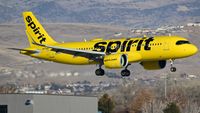
In July 2010, Spirit Airlines CEO Ben Baldanza appeared before a House committee to defend one of the most controversial business models in U.S. aviation. Under Spirit's "Bare Fare" approach, the airline stripped its ticket down to the seat itself, charging separately for everything else – carry-on bags, onboard refreshments, and other once-standard amenities – in exchange for dramatically lower base fares.
Consumers didn't like it. At least they said they didn't.
Yet, rather than trying to appease Congress, Spirit doubled down.

"Spirit believes that unbundling [non-essential services] allows the customers the choice to purchase services or not, and this benefits the traveling public through lower total cost," Baldanza told lawmakers.
Spirit ultimately won that argument. The model reshaped pricing across the airline industry, forcing prices down as legacy carriers rushed to respond. But as those larger carriers adapted, they began to leverage their scale, networks, and premium offerings. The very disruption that once set Spirit apart began to work against it.
Before long, the ultra-low-cost pioneer found itself not leading the market, but fighting for survival.

Unlock the full story.
Subscribe to keep reading, or read for free with ads (metered).
Learn More or Log in
Comments (0)
 Talha
I hate low-cost airlines. But I wonder what makes RyanAir (or Air Asia) still competitive in the market?
Talha
I hate low-cost airlines. But I wonder what makes RyanAir (or Air Asia) still competitive in the market?
Add Your Comment
Recommended Articles
-
 How AI Quietly Became the Backbone of Today’s Aviation Industry
-
 The Shape of Disaster: The Plane That Kept Falling Apart Mid-Air
-
 Only Way Out: Private Aviation in a Region at War
-
 The Cockpit’s Next Revolution: When the Co-Pilot Is a Computer
-
 The Hidden Cost: Why Airlines Are Rethinking Fleet Simplification