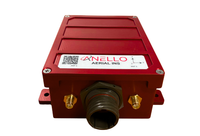
As autonomous aircraft become more capable, they are also becoming increasingly dependent on one technology that can no longer be taken for granted: GPS. Whether caused by jamming, spoofing, interference, or complete signal loss, degraded GNSS environments have become a reality for both commercial and defense operators. The challenge is no longer simply navigating - it is navigating with confidence when GPS cannot be trusted.
The global escalation of GPS spoofing has recently shifted from a regional military tactic to an acute crisis for civilian transportation. According to data from the International Air Transport Association (IATA) 2025 Safety Report, global incidents of aviation spoofing jumped by 193% between 2024 and 2025, severely disrupting commercial flight paths across the EMEA region.
This threat is equally severe at sea, with data from maritime analytics platform Windward revealing that during a single period of heightened electronic warfare in 2026, spoofing signals falsely placed more than 1,100 vessels at incorrect coordinates.
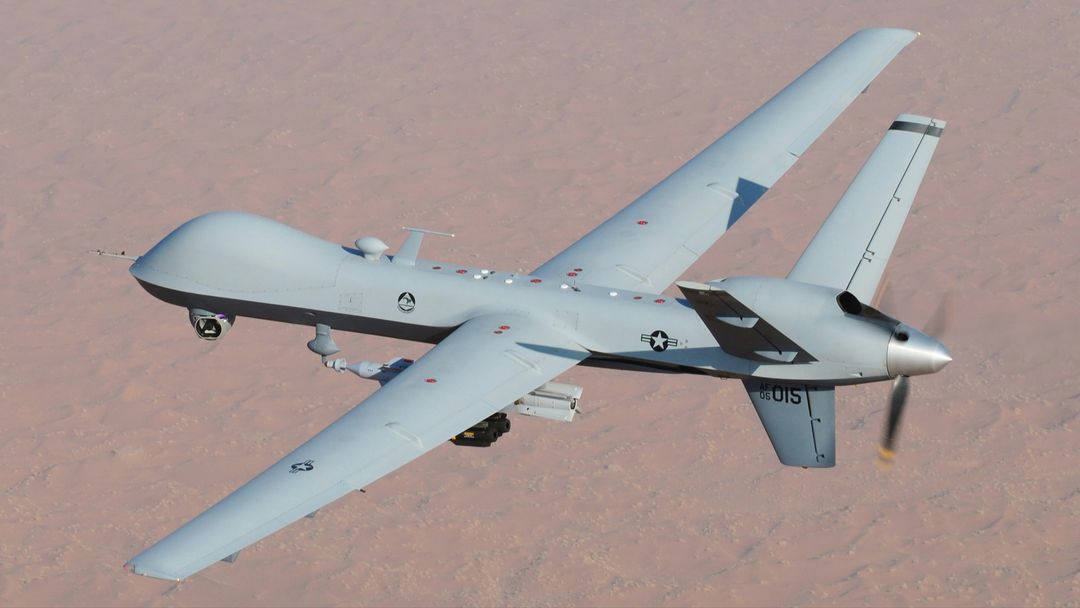
This unprecedented surge in spoofing across land, sea, and air vehicles has forced global regulatory bodies to issue urgent declarations warning that the proliferation of low-cost spoofing technology now poses a direct, systemic threat to international commerce.
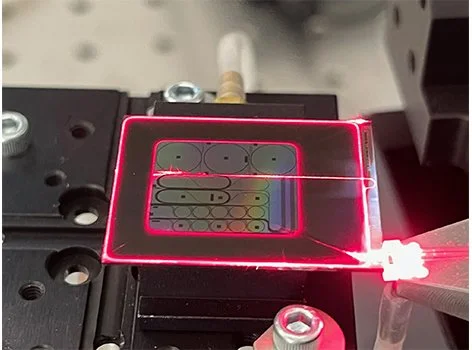
California-based ANELLO Photonics is addressing this challenge with a fundamentally different approach to inertial navigation. At the heart of the company's technology is the SiPhOG™ (Silicon Photonics Optical Gyroscope), the world's smallest high-performance optical gyroscope. By integrating the optical components of a traditional fiber optic gyroscope onto a single silicon photonics chip, ANELLO delivers navigation-grade optical performance in a dramatically smaller, lighter, lower-power, and more manufacturable package.
Unlike conventional MEMS sensors, optical gyroscopes are inherently resistant to shock and vibration and provide significantly lower drift over time. Traditionally, however, fiber optic gyroscopes have been too large and expensive for widespread deployment on unmanned aircraft. ANELLO's silicon photonics architecture changes that equation by bringing optical inertial navigation to UAVs, eVTOL aircraft, and other autonomous platforms at a practical size, weight, power, and cost. (More information available here).
Why Silicon Photonics?
Silicon photonics enables optical components to be fabricated using semiconductor manufacturing techniques similar to those used in integrated circuits. This allows for a smaller device size, improving manufacturability and potentially lowering production costs compared to traditional fiber-optic assemblies.
"Reliable navigation has become one of the defining challenges for autonomous systems," said Dr. Mario Paniccia, CEO and co-founder of ANELLO Photonics. "With SiPhOG™, we've fundamentally changed what's possible by delivering navigation-grade optical gyroscope performance on a silicon photonics chip. That allows our customers to deploy resilient navigation capabilities in aircraft where traditional optical gyroscopes were previously too large, too expensive, or too power hungry."
Dr. Walter Stockwell, Vice President of Aerial Solutions at ANELLO Photonics, added to the importance of SiPhOG™, "As UAVs are increasingly asked to operate beyond visual line of sight and in contested environments, resilient navigation is becoming mission critical rather than optional. Our aerial product portfolio gives manufacturers an easy path to integrate optical-grade inertial navigation into existing flight stacks while providing the accuracy and reliability required for next-generation autonomous operations."
ANELLO X3 IMU: Optical Performance in an Ultra-Compact Package
One of the company's flagship aerial products is the ANELLO X3 IMU, an ultra-compact three-axis optical gyroscope inertial measurement unit designed specifically for aerial autonomy.
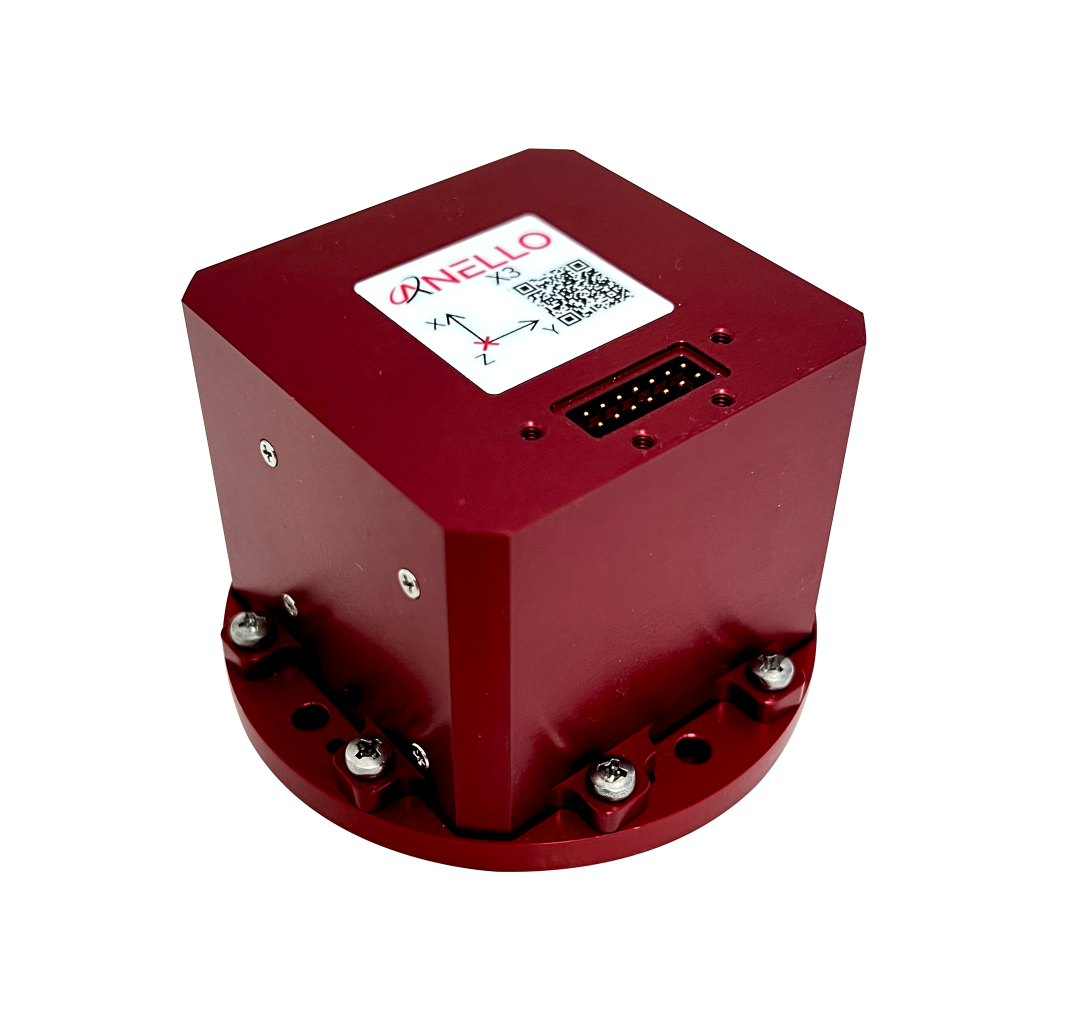
Powered by three independent SiPhOG™ optical gyroscopes, the ANELLO X3 IMU delivers navigation-grade performance while maintaining one of the industry's smallest footprints. Compatible with both PX4 and ArduPilot flight controllers, the X3 enables UAV manufacturers to improve navigation accuracy, reduce drift, and maintain stable flight in environments where conventional MEMS sensors begin to struggle.
Its compact size and low power consumption make it well suited for applications including:
- Commercial and defense UAVs
- ISR platforms
- eVTOL aircraft
- Surveying and mapping drones
ANELLO Aerial INS: Complete Navigation for GPS-Denied Flight
Building on the success of the X3, ANELLO introduced the ANELLO Aerial INS at CES 2026, expanding its portfolio with a fully integrated inertial navigation system designed for demanding aerial operations. (PR Newswire)
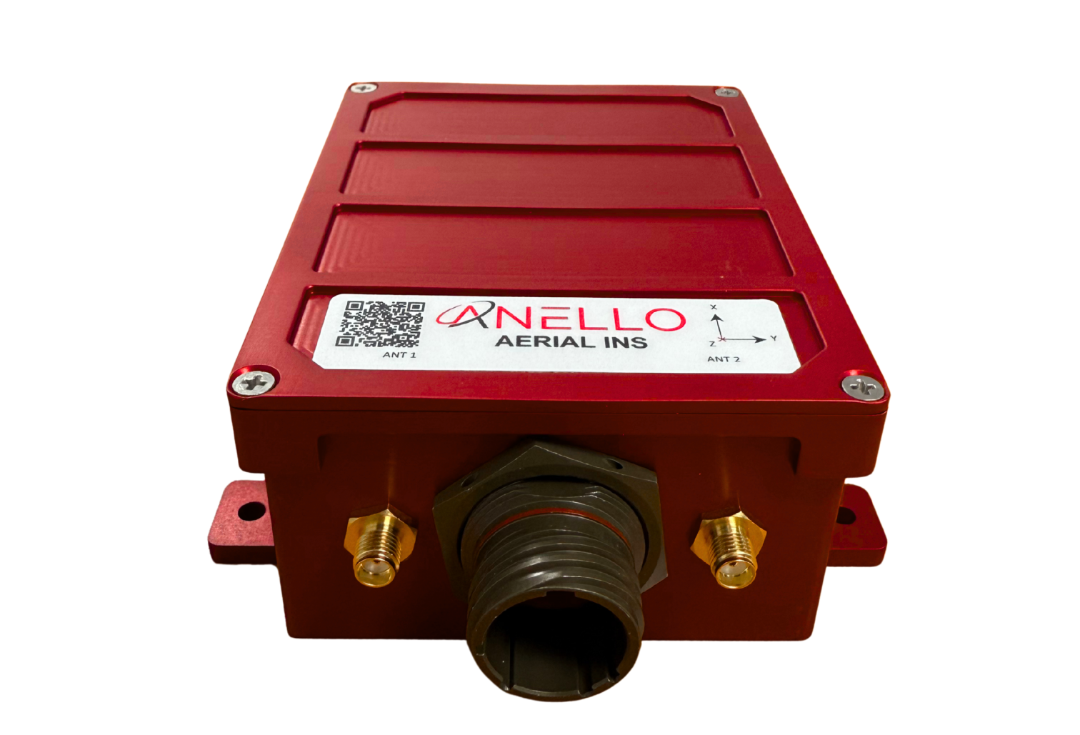
The ANELLO Aerial INS combines:
- SiPhOG™ optical gyroscopes
- Multi-band, all-constellation GNSS receivers
- Advanced EKF-based sensor fusion
- Flight-profile optimized navigation algorithms
The result is a complete navigation solution capable of maintaining accurate positioning and heading through GNSS jamming, spoofing, signal blockage, and other degraded operating conditions. Designed for BVLOS UAVs, heavy-lift drones, VTOL aircraft, ISR platforms, and other autonomous aerial systems, the system allows aircraft to continue their mission without relying on cameras or traditional fiber optic gyroscopes.
Visit ANELLO at Farnborough International Airshow
Visitors attending the Farnborough International Airshow will have the opportunity to see ANELLO's latest navigation technologies firsthand, including the ANELLO X3 IMU and the ANELLO Aerial INS.
Stop by Hall 2, Booth 2338 to meet the ANELLO team, learn more about SiPhOG™ technology, and discover how resilient GPS-denied navigation is enabling the next generation of autonomous aerial systems.
Comments (0)
Add Your Comment
Recommended Articles
-
 How AI Quietly Became the Backbone of Today’s Aviation Industry
-
 The Shape of Disaster: The Plane That Kept Falling Apart Mid-Air
-
 Only Way Out: Private Aviation in a Region at War
-
 Analysis: How Spirit Airlines Changed Airline Pricing, then Paid the Price
-
 The Cockpit’s Next Revolution: When the Co-Pilot Is a Computer