
You’re in a crowded airport terminal, teeming with frustrated travelers. It’s 3:55pm, and your 1:30pm flight has been delayed yet again. You’re looking for a quieter corner from which to call the office. There’s no way you’re going to make it by close of business today. The agreement will not be signed in time. The work of a dozen executives and managers will not come to fruition today. The potential loss of revenue to the company could mean millions of dollars.
You break out in tears in front of a crowd of perfect strangers at the customer service counter. The primly-dressed airline agent across the counter looks at you with sympathetic eyes, but there is nothing she can do. The flight has been cancelled, and being the last flight to the islands, there is no later flight. You will not get to your sister’s destination wedding before it takes place tomorrow morning. Now you need to call her and tell her about it. You are heartbroken.
Marc Sellouk, pilot and entrepreneur, has the solution to your problem. Marc is the CEO of Flyte, a company he believes will revolutionize the way people see private air travel. By using just the right type of aircraft for the job, Flyte minimizes the ever-increasing unreliability of travel while enhancing the convenience and economic viability of private air service.
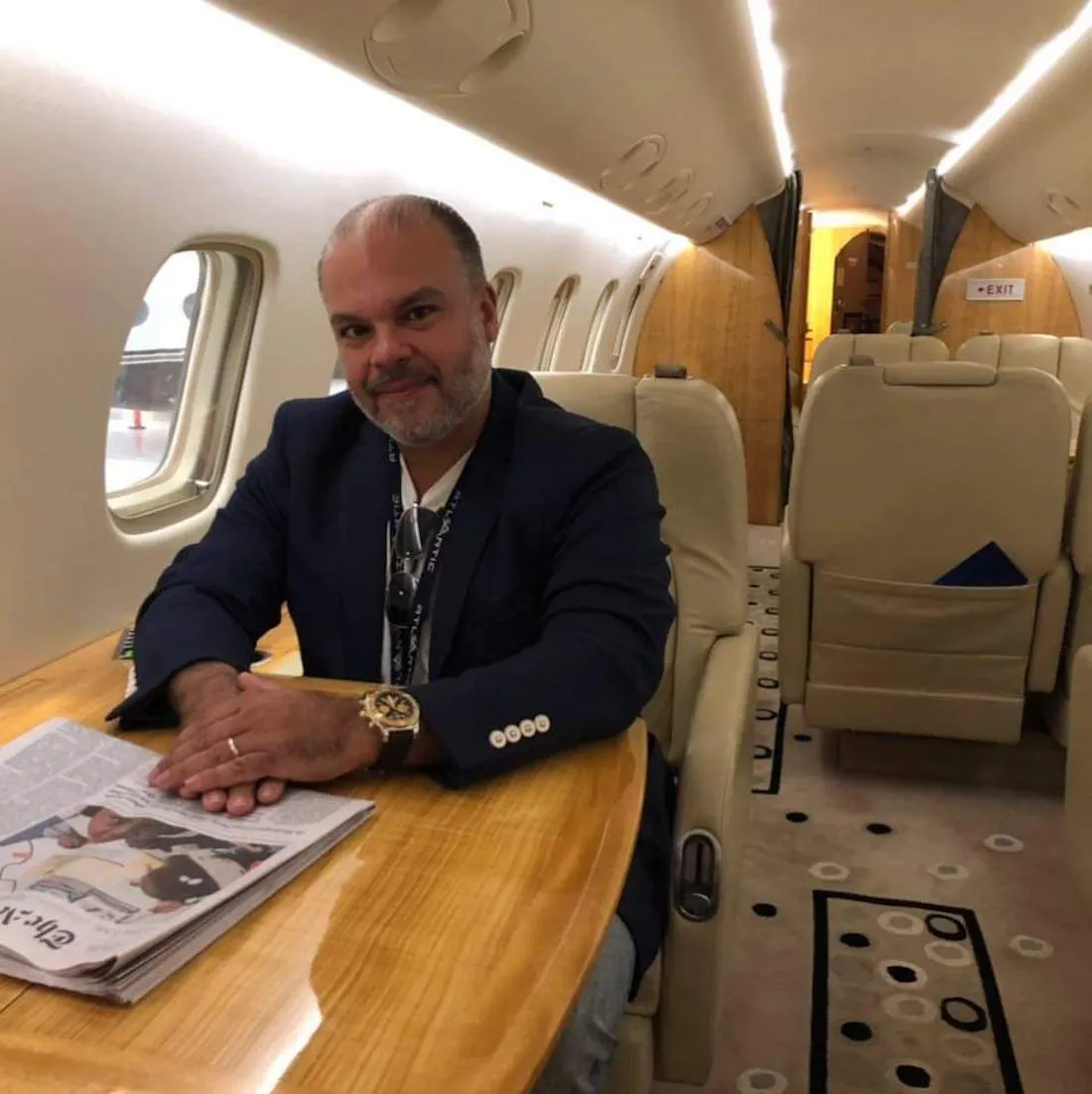
Historically, private jet flying has been seen as a luxury service for the wealthy, or a perk provided by the deep pockets of large corporations. But Sellouk wants to encourage potential clients to see it in terms of convenience, reliability, and economic good sense. It is no longer a luxury, it’s an economic necessity.
“People don’t realize how many airports there actually are,” Sellouk says. The average person in the New York City area may be familiar with the usual suspects – Kennedy, LaGuardia, and Newark – with an occasional mention of Teterboro in New Jersey. But there are at least another half-dozen airports on Long Island alone capable of handling small jets. “There are over 19,400 public use airports in the United States, yet only 434 of them are known to the typical air travelers because they are served by regularly scheduled airlines. The rest are closer to where you ultimately want to be.”
Alaska Goes Global: How Hawaiian Airlines Changed the Carrier’s Future
“Regional Air Mobility:” A New Paradigm
Sellouk, 47, was one of those kids who stood at the end of the runway watching the planes take off and land. He pursued his pilot’s license, and later attended Queen’s College where, like many entrepreneurs of a certain youthful age, he achieved success early in the world of internet and telecommunications. He founded Transbeam, a nationwide managed data and voice services provider of all network needs for businesses. After selling Transbeam to GTT for $28 million in 2017, Sellouk found himself in a position where he was unsure about what to do next. Fortunately, he was the recipient of valuable counsel from his spouse: return to something you’re passionate about.
For him, that meant flying.
Sellouk owned a Piper Aztec, a vintage twin-engined airplane designed in the 1950s by the Stinson Aircraft Company and manufactured by Piper from the 1960s to the 1980s. He flew the Aztec nearly every day for six months, up and down the East Coast. As he did so, Sellouk noted similarities between his personal flying and the activities of regularly scheduled airline and charter flight operations. In the Aztec, Marc connected popular origins and destinations in a timely manner, but with the advantages of flying into less congested airports that were ultimately closer to the places passengers wanted to be: their places of business, their vacation spots, or the front doors of their homes.
Not long after that realization, Sellouk founded Flyte by purchasing an existing charter operator with his own capital. He immediately began to put his ideas to the test.
Convenience: Bypassing the Hub
While Flyte offers chartering brokerage service through which clients can access any of the well-known types of charter aircraft – like Cessna Citations or Gulfstreams – the heart of Flyte’s innovation lies with aircraft in the category known as Very Light Jets, or VLJs – in particular, the ultra-high tech VisionJet built by Cirrus Aircraft. VisionJets can fly anywhere most piston-driven general aircraft can fly, meaning smaller airports with shorter runways. Because scheduled airlines and charter businesses operate under different sets of security regulations, most private jet travelers are not required to pass through TSA checkpoints, or be at the airport hours early. Most drive right up to the side of the aircraft.

The Very Light Jet
Flyte’s VisionJets find their sweet spot in the 1-2 hour flight, where its maximum cruise speed of just over 300 knots easily and comfortably connects virtually any popular city pair within a 400 mile radius. The VisionJet G2 and G2+ models accommodate 3 adult passengers in addition to the pilots, plus two child passenger seats (less than 90 lbs) available in a third row. In single-pilot operations, the additional front seat can be used for a revenue passenger. The 2026 G3 model replaces one of the child seats with a seat for an adult.
Some private aviation customers have been reluctant to charter single-pilot aircraft in the past, but advanced technology such as the Cirrus Airframe Parachute System (CAPS), and the Safe Return Emergency Autoland System, goes a long way toward overcoming resistance to single-pilot operations, thus opening capacity and making per-flight operations less costly. Should the pilot become incapacitated, anyone in the cabin of the airplane can activate the system with the press of a button, and the system autonomously controls speed, altitude, navigation, communication, and landing at the nearest suitable airport. If the aircraft suffers a failure that would make a safe return to an airport impossible, CAPS deploys a parachute that lowers the entire aircraft safely to the ground.
The Cockpit’s Next Revolution: When the Co-Pilot Is a Computer
Reliability in the Face of Service Interruptions
Recent headlines are replete with stories of delays of many hours, stranding travelers in terminals, or worse, stuck inside the airplane on the taxiway waiting for a takeoff clearance or for an open arrival gate. Many of these delays are systemic, a result of over-scheduled hub airports where the airlines schedule arrivals at the same popular times. Other delays are caused by technical failures of archaic air traffic control infrastructure. Most recently, some airport operators are suggesting travelers arrive at the airport four hours early due to TSA staff shortages attributed to the partial federal government shutdown.
Airline completion rates – the percentage of flights that ultimately arrive at their destination, delays notwithstanding – are monitored closely by the DOT. Typical major airline completion rates are 95-98%, with standout SkyWest Airlines boasting a 99.9% completion rate as recently as the 4th Quarter of 2024.

But delays are much more common. In 2025, the best performing on-time airlines were United, with 84.6% of its flights arriving on time, and Delta, with 83.5% of their flights on time. The worst performing airlines in 2025 saw 25-28% of their flights delayed. Extended delays not only fray tempers over ruined vacation plans, but can also cost millions of dollars in lost productivity. Mitigating the impact of such delays is a high priority in today’s air travel environment. Flying executives where they are needed in a matter of hours – instead of consuming an entire day of traveling by car or being stuck in a hub airport – has the potential to benefit the bottom line of any sized business.
The Market
Currently, Flyte operates three VisionJets in the Northeast region, and has introduced new service in Miami and South Florida. Much of the market is a seasonal business as vacationers connect Long Island with Nantucket, Martha’s Vineyard, or the ski slopes of Stowe, VT, for example. But future growth will come from an expanding regard for this option,
“We’re seeing a clear and growing imbalance between supply and demand in the New York market,” CEO Sellouk says. “More importantly, we believe there is a significant opportunity to build a consistent, year round business travel corridor linking New York with key markets such as Washington, D.C. and Boston, where speed, convenience, and frequency are highly valued.”

Current policy is to reserve the entire aircraft. Prices range from $6,250 for one-way trips and $8,250 round trip for four adult seats. Even at that price, the per-seat cost might just be competitive with a Business Class seat on a longer or high-demand route. But when companies factor in the cost of losing a key employee’s entire day of productivity while en route from one place to another, the case for Flyte’s efficiency becomes stronger and stronger.
Sellouk believes a per-seat option might be available in another two years. Flyte has the potential to serve all Tier-1 cities, and Sellouk plans to expand deliberately and carefully, collecting data from the real-world experience of actual operations in new markets.
This development in the regional air travel paradigm stands to benefit multiple stakeholders. If such right-sizing of supply and demand in the charter space is successful, the frequency, availability and convenience of private air travel might transform the space into something much more utilized by many more people who have never had access to it before. A broader network of airports would see increased use, relieving hubs of some of the traffic and congestion both inside the terminals and in the surrounding airspace. The growth in the frequency and types of services that private charter operators such as Flyte offer will not only expand the benefits for current private customers, but will also open exciting opportunities for new travelers to take advantage of all the freedoms of modern aviation.
Comments (0)
 ANTHONY M HOARE
Flyte CEO Marc Sellouk Wants to Rethink How "American billionaires can steal more of our money".
ANTHONY M HOARE
Flyte CEO Marc Sellouk Wants to Rethink How "American billionaires can steal more of our money".
Add Your Comment
Recommended Articles
-
 How AI Quietly Became the Backbone of Today’s Aviation Industry
-
 The Shape of Disaster: The Plane That Kept Falling Apart Mid-Air
-
 Only Way Out: Private Aviation in a Region at War
-
 Analysis: How Spirit Airlines Changed Airline Pricing, then Paid the Price
-
 The Cockpit’s Next Revolution: When the Co-Pilot Is a Computer