
For many years, Perth Airport has been a pilgrimage destination for planespotters. The airlines based there – Network Aviation, Skippers Aviation, Maroomba Airlines, and more – have consistently used older aircraft for their intrastate operations across Western Australia. Perth sees more daily Fokker 100 flights, for example, than almost any other airport in the world.
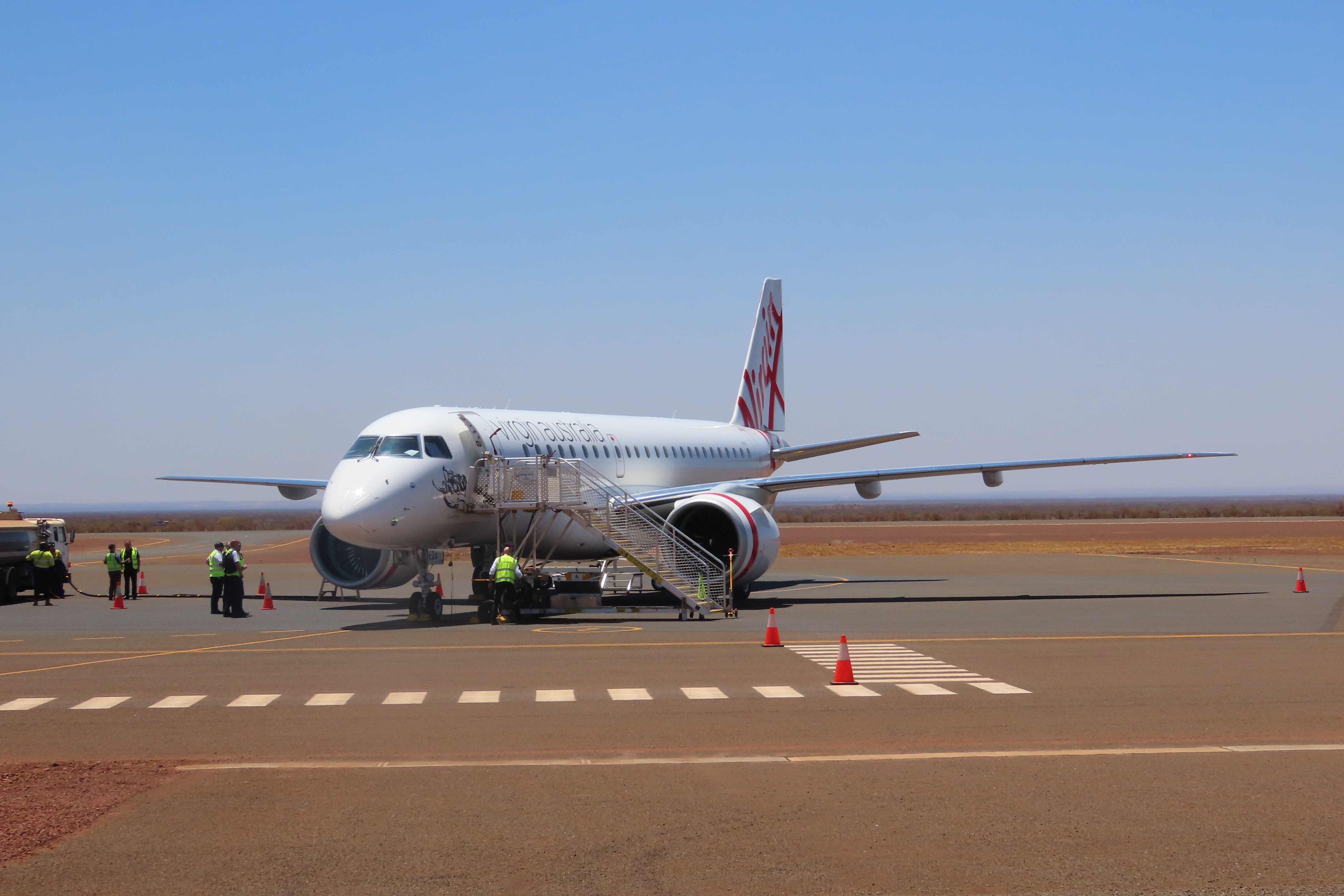
In the past, that has been okay. After all, the majority of airline passengers in Western Australia are flying for free: it’s one of the largest mining regions in the world, and mining operations have lucrative contracts with local airlines for “Fly-In, Fly-Out (FIFO)” flights – charter flights that carry workers between major cities and mine sites. Having modern, flashy aircraft in a charter market didn’t really make much sense, since every competing airline flies the same old Fokker 100s, and the passengers don’t mind, as their tickets are paid for by their employer. But in September 2024, Virgin Australia Regional Airlines decided to change the way people fly in WA, with a historic order for eight Embraer E190-E2s.
The Birth of the E-Jet
Embraer announced the launch of the original E-Jet family in 1999, as a modern replacement for older regional jets and turboprops, such as the BAe-146 and Fokker 70/100. Production began with the 78-seat E170 prototype, which rolled out of Embraer’s final assembly line in São Paulo in 2001.
Following the E170’s success, Embraer launched the E190, a stretched and improved version of the E-Jet with seating for up to 124 passengers. The E175 and E195 were developed shortly after, completing the first-generation E-Jet family. The E-Jet became nicknamed the “Jungle Jet” after its factory’s Brazilian location, and has rapidly earned its place as one of the world’s most popular regional aircraft. To date, the aircraft has flown for over 150 airlines and sold more than 2,000 units.

Unlock the full story.
Subscribe to keep reading, or read for free with ads (metered).
Learn More or Log in
Comments (0)
Add Your Comment
Recommended Articles
-
 How AI Quietly Became the Backbone of Today’s Aviation Industry
-
 The Shape of Disaster: The Plane That Kept Falling Apart Mid-Air
-
 Only Way Out: Private Aviation in a Region at War
-
 Analysis: How Spirit Airlines Changed Airline Pricing, then Paid the Price
-
 The Cockpit’s Next Revolution: When the Co-Pilot Is a Computer