When you think of paper airplanes, your immediate thought would be the simple contraption that, after a series of paper folds, barely manages to fly even a few feet.
To most, paper airplanes, detail, and sophistication may not belong in the same sentence. Yet, Joshua Jung – also known by his social media handle @jaeseopapercraft – is taking the paper airplane game to a whole new altitude.
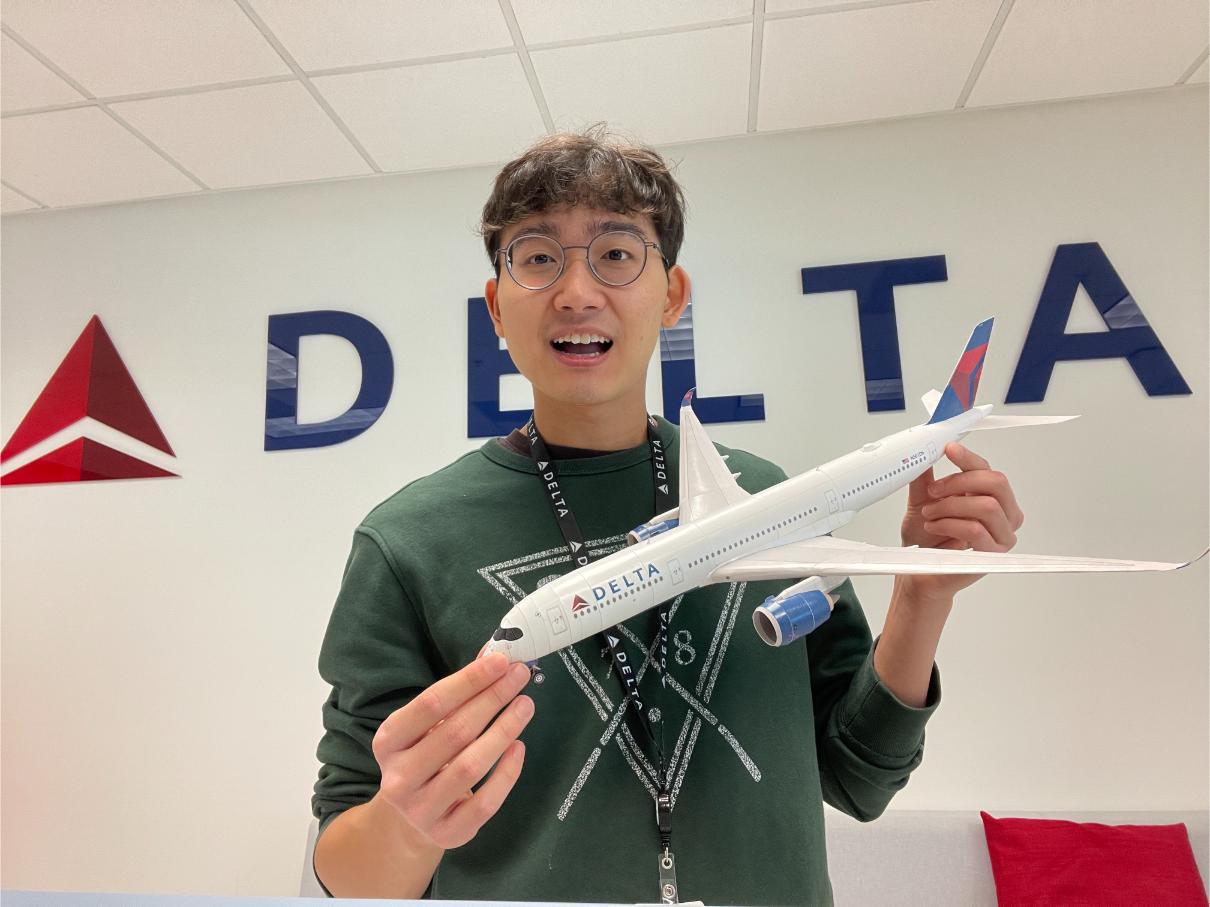
Josh’s detailed paper aircraft models have caught the attention of hundreds of thousands on social media. Jetstream Magazine sat down with Josh to hear about his fascinating and inspiring journey through papercraft.
A Childhood Spark
Josh’s fascination with aviation was present from a young age. Trips to the airport always carried with them a sense of excitement and happiness, especially whenever his family would pick up his grandparents visiting from Korea. “Just being in that environment felt really cool,” he recalls. “I think that’s where it started.”
But the inspiration to pick up scale modeling came later in middle school through a different kind of exposure: YouTube.
Watching videos of intricately detailed model airports, complete with hundreds of die-cast aircraft, Josh was captivated. “I thought, ‘I want that. I want to build that in my home.’”
The Cockpit’s Next Revolution: When the Co-Pilot Is a Computer
There was just one problem: the cost.
With die-cast model aircraft costing between $40 and $50 at the time, it’s safe to say that Josh’s parents were not too fond of the idea.
Josh recounts: “I started thinking, ‘How do I achieve this dream on a budget?’” and highlights the first homemade airplane video he found on YouTube. The video, showcasing the build of a Hawaiian Airlines A330, was enough to compel Josh to begin building models of his own.
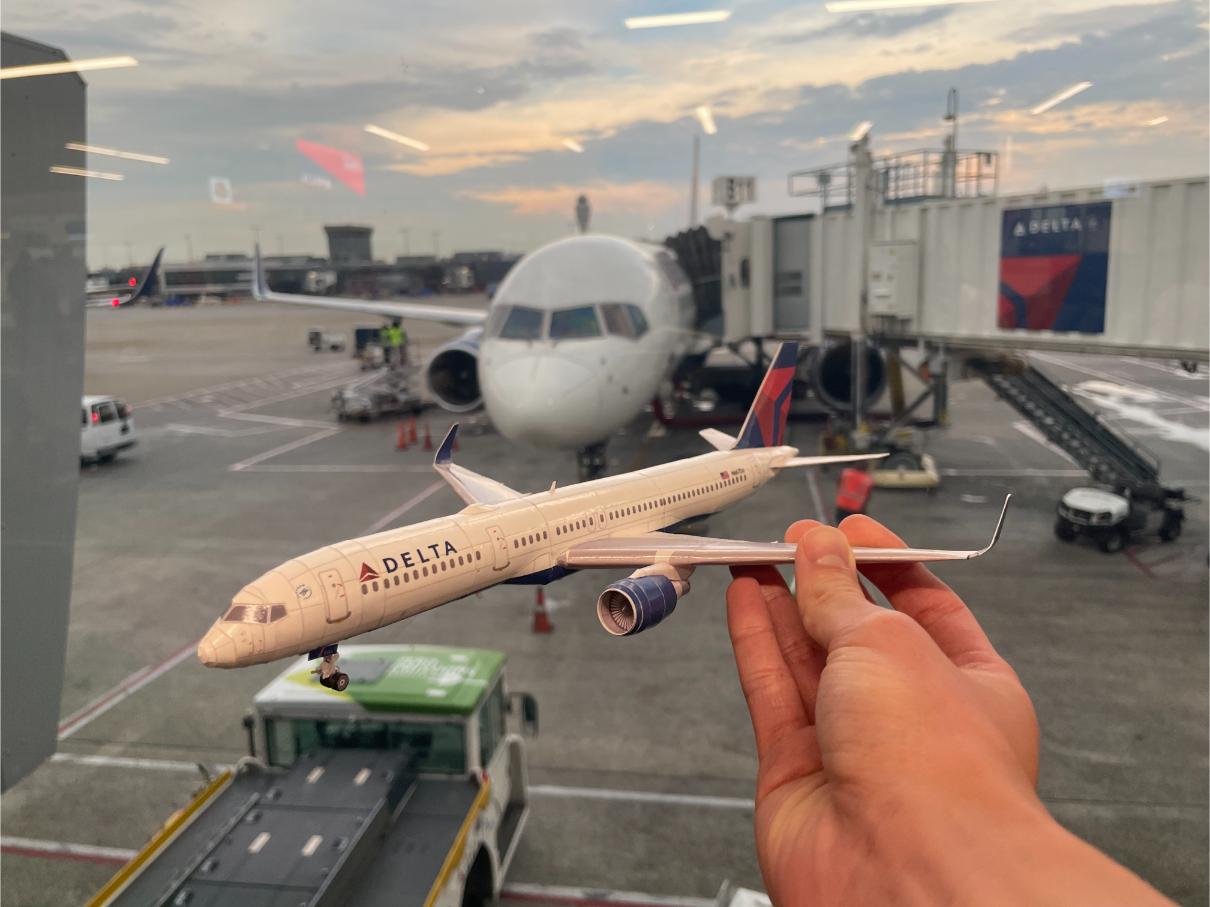
But these models weren't the typical die-cast, homemade metal models requiring hours of computer design, molding, and 3D printing. Rather, they used a material commonly found in households, at a small fraction of the price: paper.
This type of model-building is called papercraft, a niche community where enthusiasts build highly detailed models using printed templates. These templates are usually created by individuals who upload them to public forums, where others can download and print them.
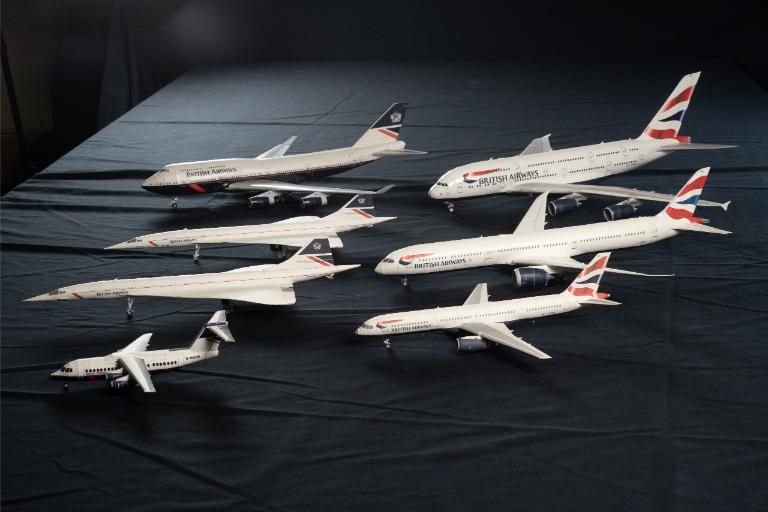
At first glance, these papercraft airplane templates look daunting. They almost resemble miniature blueprints of a real aircraft with two-dimensional nets of each component. Yet, by cutting out, folding, and assembling the components, the result is an intricate and sophisticated aircraft model.
Indeed, these projects are no easy task. Josh explains that his first build was nothing to be proud of. “It was bad,” he admits, “Tape everywhere, black-and-white prints, ink smudging all over the paper.”
For nearly a year, his models fell short of his desired vision. But instead of quitting, Josh used these rough first attempts as learning experiences.
As he puts it, “That process really built perseverance. It was so hard to get a good result that I just kept wanting to improve.”
Over time, the results of Josh’s subsequent builds caught up with the effort. With lots of practice and patience, building with precision, he began to see his builds turn into detailed, clean-cut models he was now proud of.
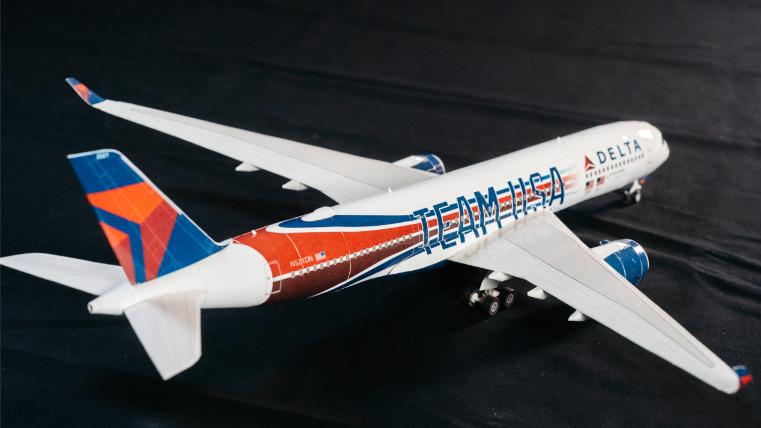
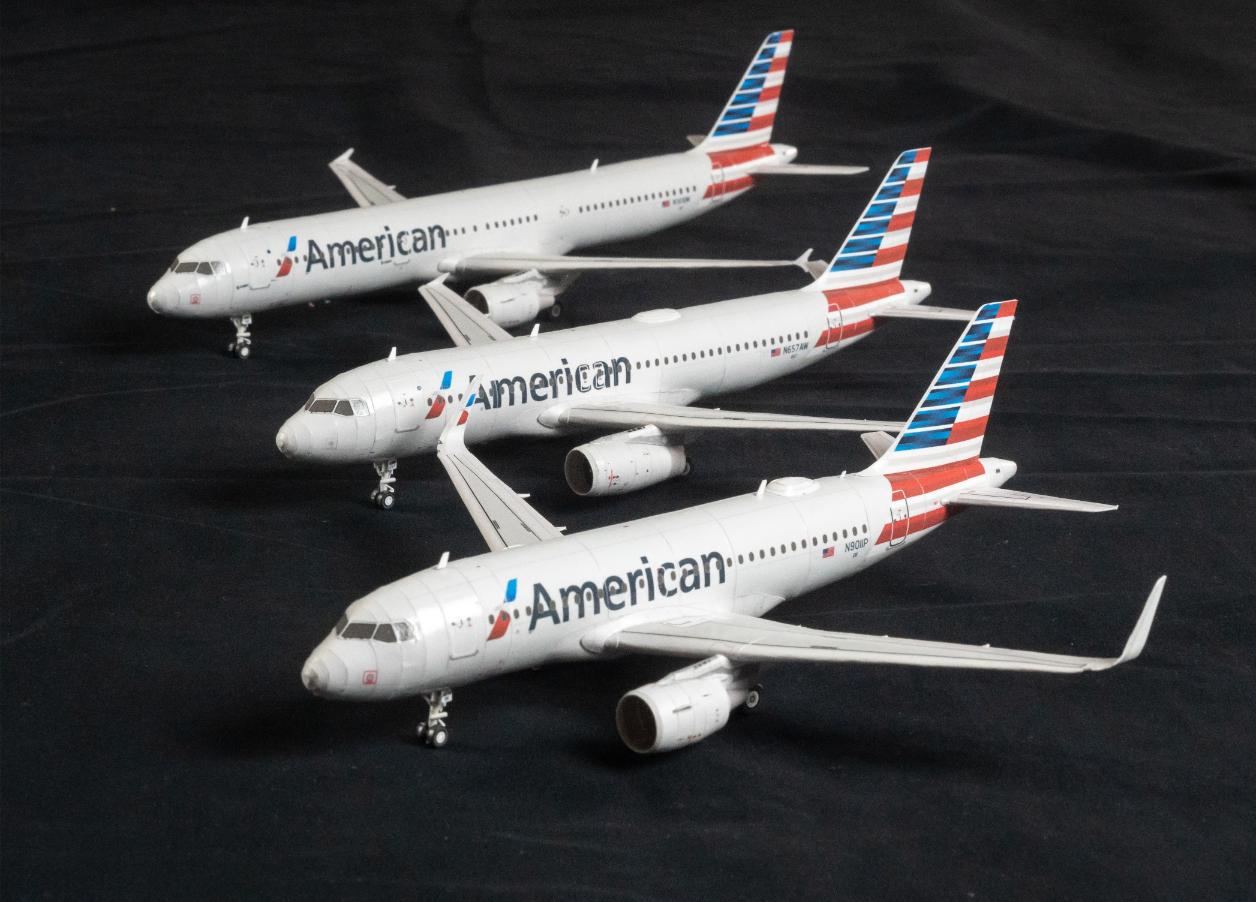
As it turns out, Josh’s talent was not something unique to his family. He credits the inspiration behind his adoption of papercraft largely to his mother.
“My mother would always do DIY crafts, and my first birthday presents were always handmade figures…the passion for doing things myself really came from her.”
Today, more than a decade later, Josh has built over 300 aircraft, each model a culmination of hours of careful, painstaking craftsmanship. But what does assembling these models look like?

Only Way Out: Private Aviation in a Region at War
The Craft Behind the Models
Each model begins as a digital template, essentially a flattened blueprint of an aircraft. Josh is quick to recognize those who created and uploaded these templates.
“Around 60% of the model is thanks to the person who created the template. I wouldn’t be able to do the work I’ve done without them”, he says.
Once printed on thick cardstock, the process is fairly straightforward: folding each component and putting them together.
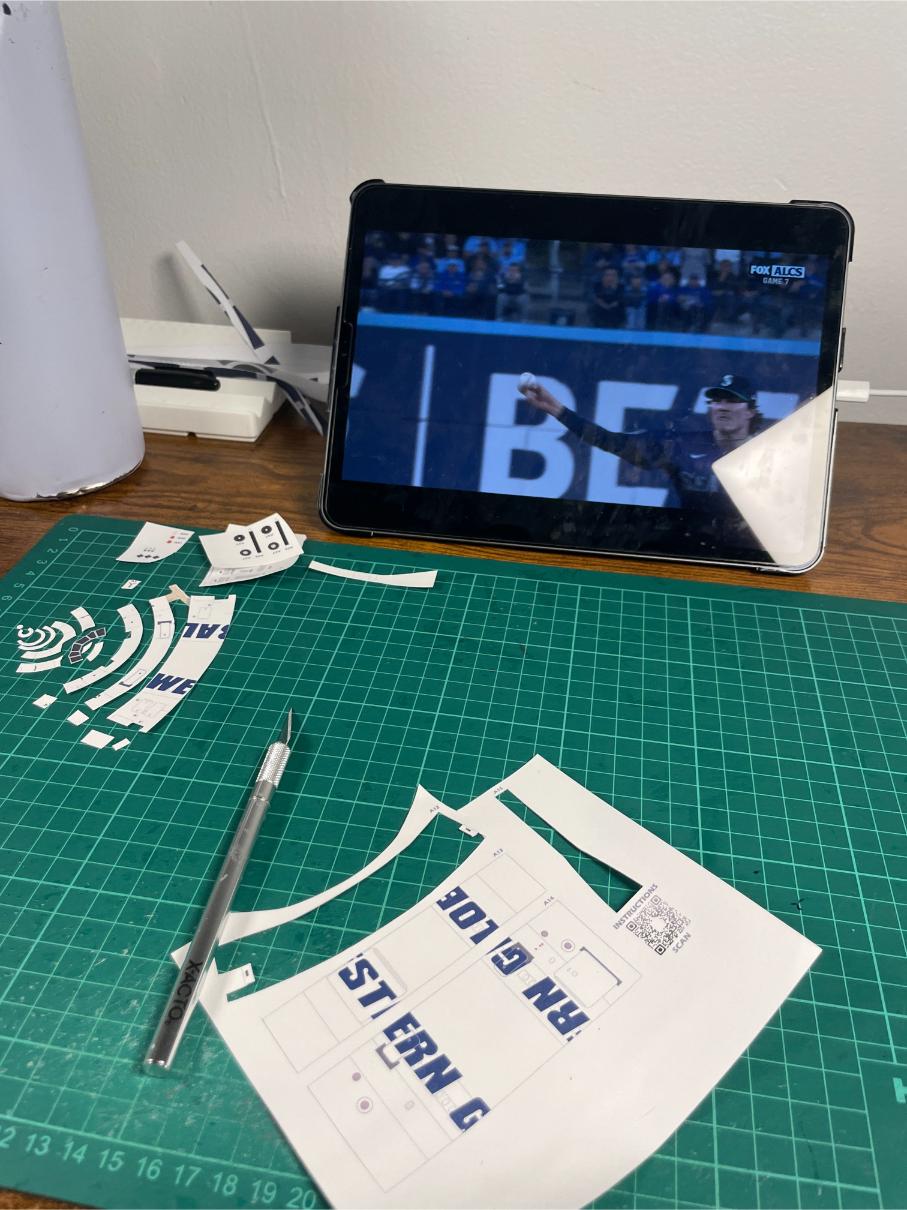
Josh put it as simply as: “It’s a lot of making tubes, gluing tubes, and then gluing tubes together.” Specifically, this relates to the modular aspect of Josh’s builds. The fuselage itself is usually split into sections, meaning each section’s tube is assembled individually and then joined together - almost like how the real aircraft are assembled in the factories.
Using tools ranging from precision blades to automated cutting machines, he carefully shapes each piece, rolling fuselage sections into smooth cylinders, assembling wings, and integrating supports wherever necessary.
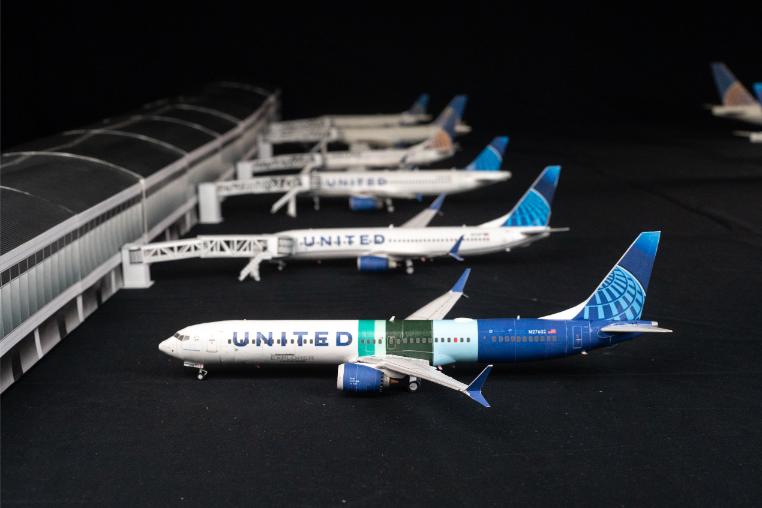
Being built from paper, the models are mostly hollow, especially the main fuselage sections. To provide more rigidity, Josh installs bulkheads, which are thin, solid demarcations that are placed at various points inside the fuselage. This way, the otherwise hollow fuselage remains structurally sound.
Josh’s builds often include more advanced techniques such as magnets embedded inside the aircraft’s fuselage and wings, allowing for sturdy yet easily detachable components. Josh also fits his builds with counterweights to ensure proper balance and to eliminate the risk of a model being too “tail-heavy” and tipping back.

Analysis: How Spirit Airlines Changed Airline Pricing, then Paid the Price
He even goes a step further and colors the edges of specific parts – such as the landing gear – with black marker. This way, any visible white paper seams are masked such that they do not detract from the model’s realism.
Finally, to ensure longevity, Josh sprays his completed builds with anti-UV coatings to preserve their color and add a polished finish. The result is a shining, detailed, and impressive replica of a commercial aircraft. Most of Josh’s models range from 1/100, 1/150, and 1/200 scale, with some exceptions.
The “scale” of a model is a ratio denoting how many times smaller the model is compared to the real aircraft. For example, a 1/100 model would be 100 times smaller than the real aircraft.
Josh’s individual builds take multiple hours to complete. Simplified and less sophisticated builds may take as little as eight hours. However, the more detailed projects can exceed 13 hours.
As someone who works full-time, these projects are a side hobby for Josh, and he does not normally sit and complete a build in one sitting.
However, that’s not to say that Josh doesn’t spend many hours at a time working on his builds. He admits with a chuckle, “I probably should take more breaks.”
A Growing Audience and a Bigger Vision
For years, Josh’s models were built exclusively for his personal collection, driven by a childhood goal of completing his own miniature airport.
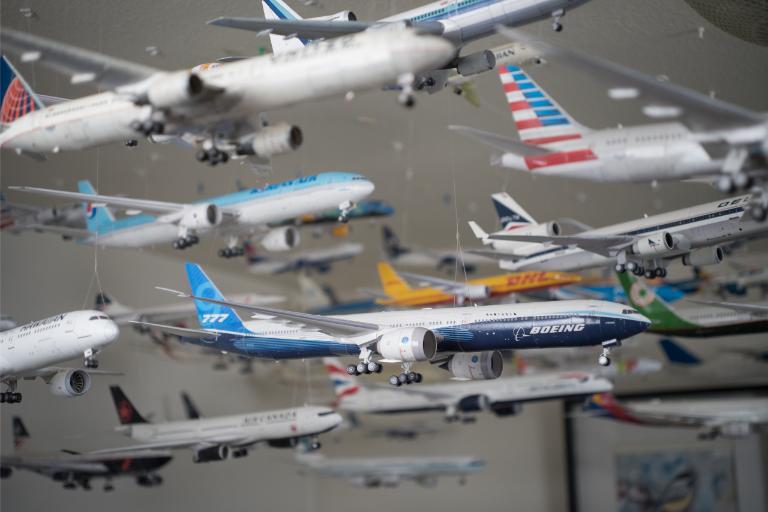
But over time, the genuine enjoyment of creating these detailed models diminished.
“Every time I finished a model, the joy disappeared,” he says. “It became, ‘What’s next? What’s next?”
That realization led to a turning point for Josh, one that was not related to his technique but to his purpose in building these models.
After watching a viral video of a photographer gifting portraits to strangers, Josh wondered if he could do something similar with his models. He then devised a plan to begin giving away special aircraft models to pilots, flight attendants, and other aviation professionals.
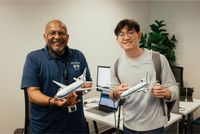
In the summer of 2025, Josh walked into Seattle-Tacoma International Airport, hoping to give away a model of an Alaska Airlines Boeing 737 MAX 9 to an Alaska pilot. “I had to gather all of my courage to go approach these two random pilots,” he recalls.
The Shape of Disaster: The Plane That Kept Falling Apart Mid-Air
While he was successful in getting the interaction he desired, the footage he recorded wasn’t perfect. The camera angle was off, and the footage felt unusable. “I was really discouraged…the phone was off-angle, and while the video was great, the footage wasn’t the best. I felt that no one would watch something like this.”
But, through some enthusiastic persuasion from a friend, Josh posted it anyway. Within a week, the video accumulated 30,000 views. If that wasn’t enough, some of Josh’s favorite creators in the aviation social media space began following him. “That was the moment I realized that, ‘Oh, maybe there is something there!’”
Since that day, every subsequent trip to the airport has been accompanied by genuine, wholesome interactions with pilots, flight attendants, and other aviation professionals. “Every time I go to the airport, I try to bring at least two models to give away.”
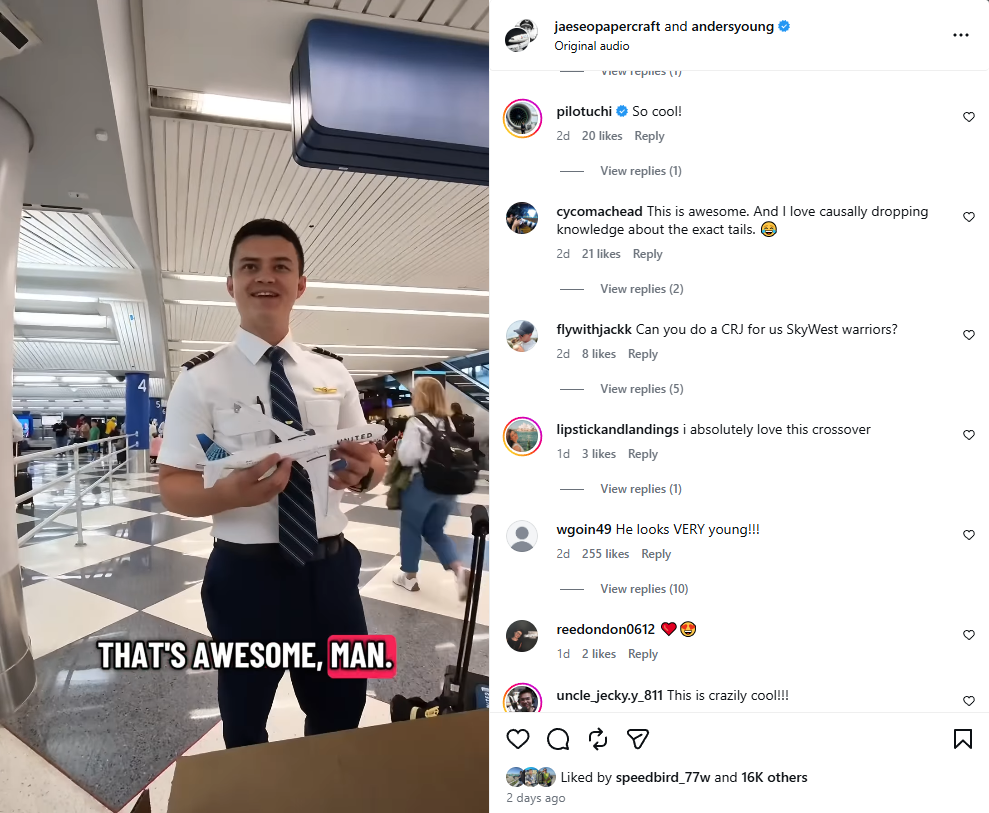
As reflected in his videos, whenever Josh hands his intricately handcrafted model to anyone, it is always followed by a moment of surprise and appreciation. It’s these moments that have become the heart of his work. “There’s this preconception of what a paper airplane is,” Josh explains. “And when people see mine, it completely shatters that.”
Josh’s videos combine craftsmanship with spontaneity, capturing unscripted reactions from aviation professionals who rarely receive such personal gestures. Since that first viral post, Josh’s social media presence has grown rapidly. His handle @jaeseopapercraft, active across Instagram, YouTube, and TikTok, has amassed hundreds of thousands of followers within the span of a year.

How AI Quietly Became the Backbone of Today’s Aviation Industry
Josh’s videos combine craftsmanship with spontaneity, capturing unscripted reactions from aviation professionals who rarely receive such personal gestures. Yet for Josh, the growth is more about the connection.
“I haven’t built a model for myself since last September,” he notes. “It’s more fulfilling this way.”
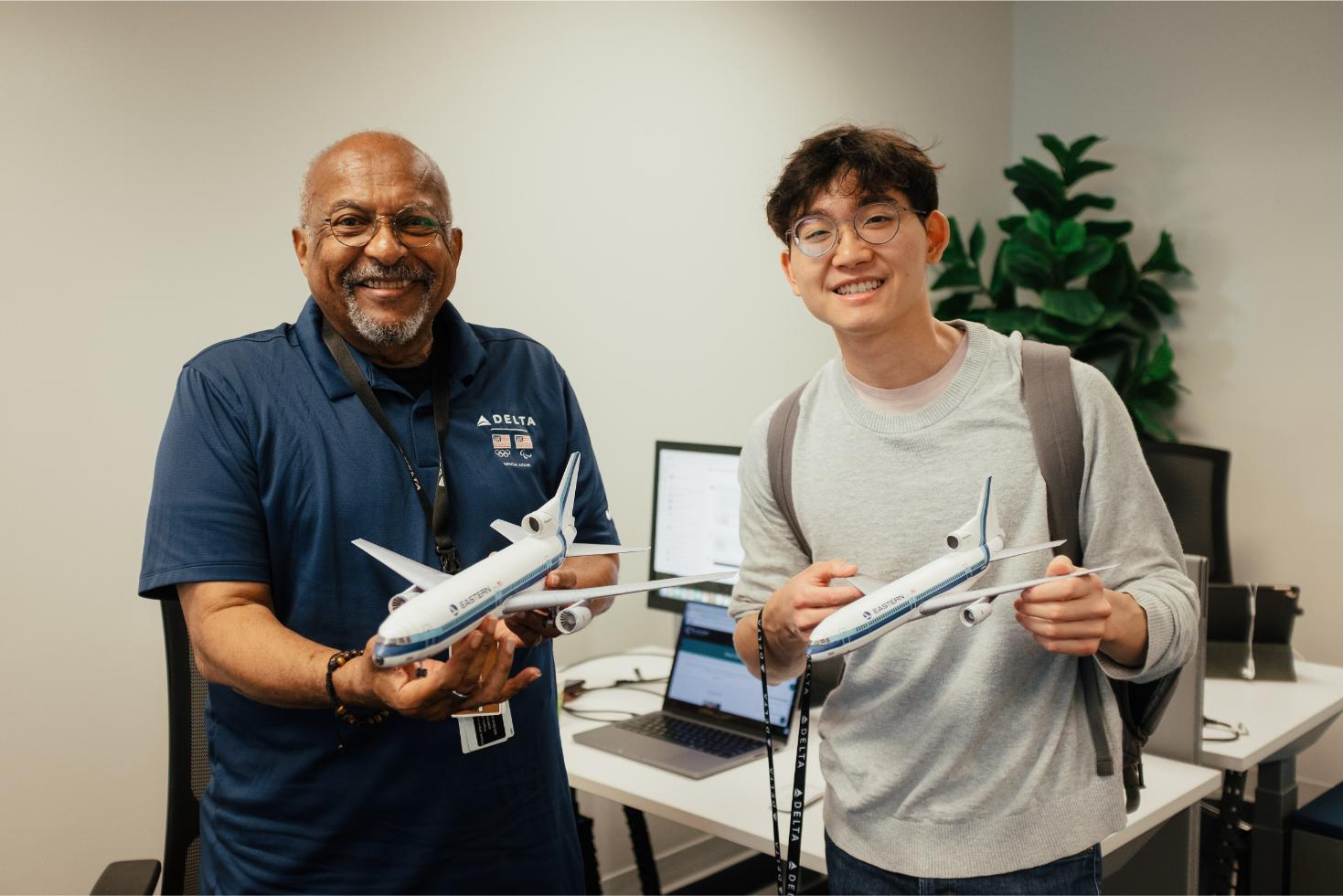
Despite how far he’s come, Josh is still eager to learn and perfect his abilities. He mentions how acquiring an automatic cutter to assist with cutting out components was a learning curve, but it is now an integral part of his build process. “I could experiment with upgrading my printer, but that’s more for down the road. I would like to work more on consistency and maintaining the basics of my builds,” he admits.
Life Beyond the Build Table
Despite the time-intensive nature of his craft, Josh’s life extends well beyond papercraft. He works full-time at a manufacturing startup, balancing long days with late-night building sessions. Outside of that, he’s deeply involved in his church community, enjoys photography, plays pickup soccer, and spends time cycling.
Still, papercraft remains a central hobby, one that is increasingly becoming more than such.
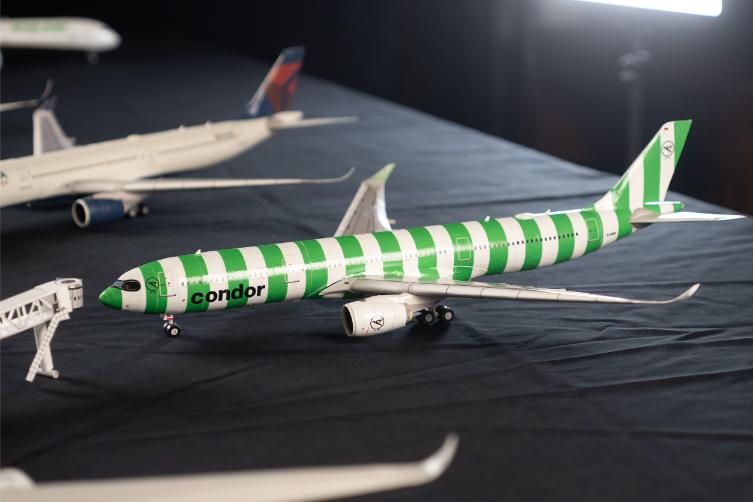
“I’m planning to try doing this full-time,” Josh admits. He’s already worked with customers to commission special builds, including shipping a Saudia Boeing 787-10 model all the way to Saudi Arabia. In the future, Josh envisions building and gifting a massive aircraft like a Boeing 747 or Airbus A380.
While Josh has built these aircraft for his personal collection, the complex nature of these aircraft means they take much longer to build. Still, Josh hopes to one day build more of them and gift such models: “It would be a lot more work, but I still think it would be super cool to give one of these away.”
Furthermore, Josh is optimistic about pushing his creativity to the max. He mentions completing an entire model mid-flight on a long-haul journey, specifically taking a business class flight and building the entire model in that setting.
The Cockpit’s Next Revolution: When the Co-Pilot Is a Computer
One of his most ambitious ideas: “I’d love to take an international flight and make like 20 planes for all of the pilots and flight crew.”
Each idea builds on the same foundation: craftsmanship paired with generosity.
The greatest gift Josh has taken away from his journey? “Having the generosity in my heart to detach myself from my hard work.”
It all comes down to his main goal: “I want people to feel joy,” Josh says. “And I want them to be inspired to give more.”
In the end, that may be the most remarkable transformation of all: not from paper into airplanes, but from tedious labor into genuine connection.
Comments (0)
Add Your Comment
Recommended Articles
-
 How AI Quietly Became the Backbone of Today’s Aviation Industry
-
 The Shape of Disaster: The Plane That Kept Falling Apart Mid-Air
-
 Only Way Out: Private Aviation in a Region at War
-
 Analysis: How Spirit Airlines Changed Airline Pricing, then Paid the Price
-
 The Cockpit’s Next Revolution: When the Co-Pilot Is a Computer