Since the first passenger-to-freighter (P2F) aircraft conversions emerged after World War 2, the industry has relied on the same general design for cargo aircraft: a large door cut into the side of an aircraft with a reinforced structure around it.
But one startup is challenging this long-used design with a new technology called the Internal Loading System, or ILS. In conversation with AeroXplorer, Alfor Aviation’s executive team shared more about the unique concept and how it can generate millions in additional revenue for operators worldwide.
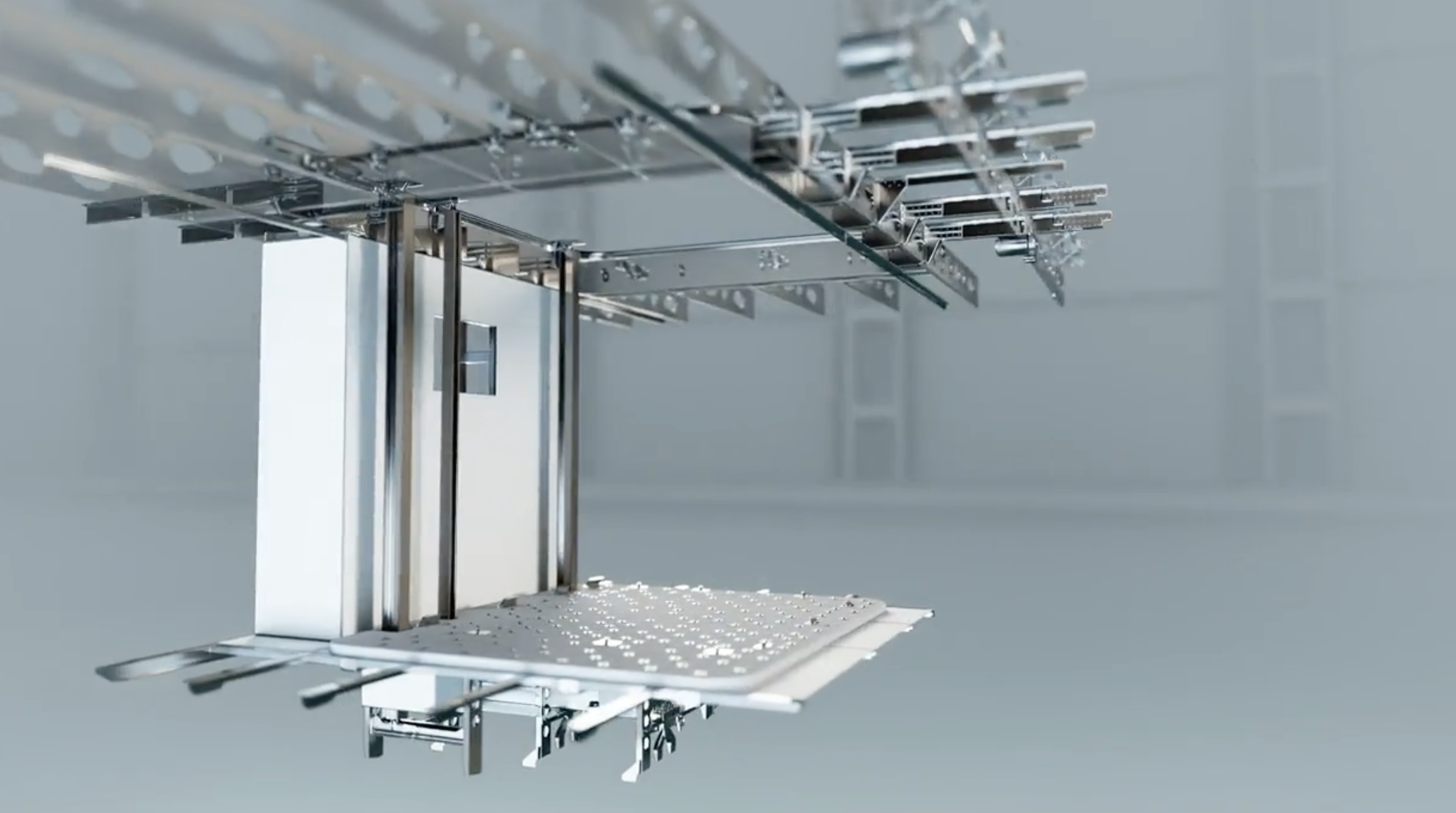
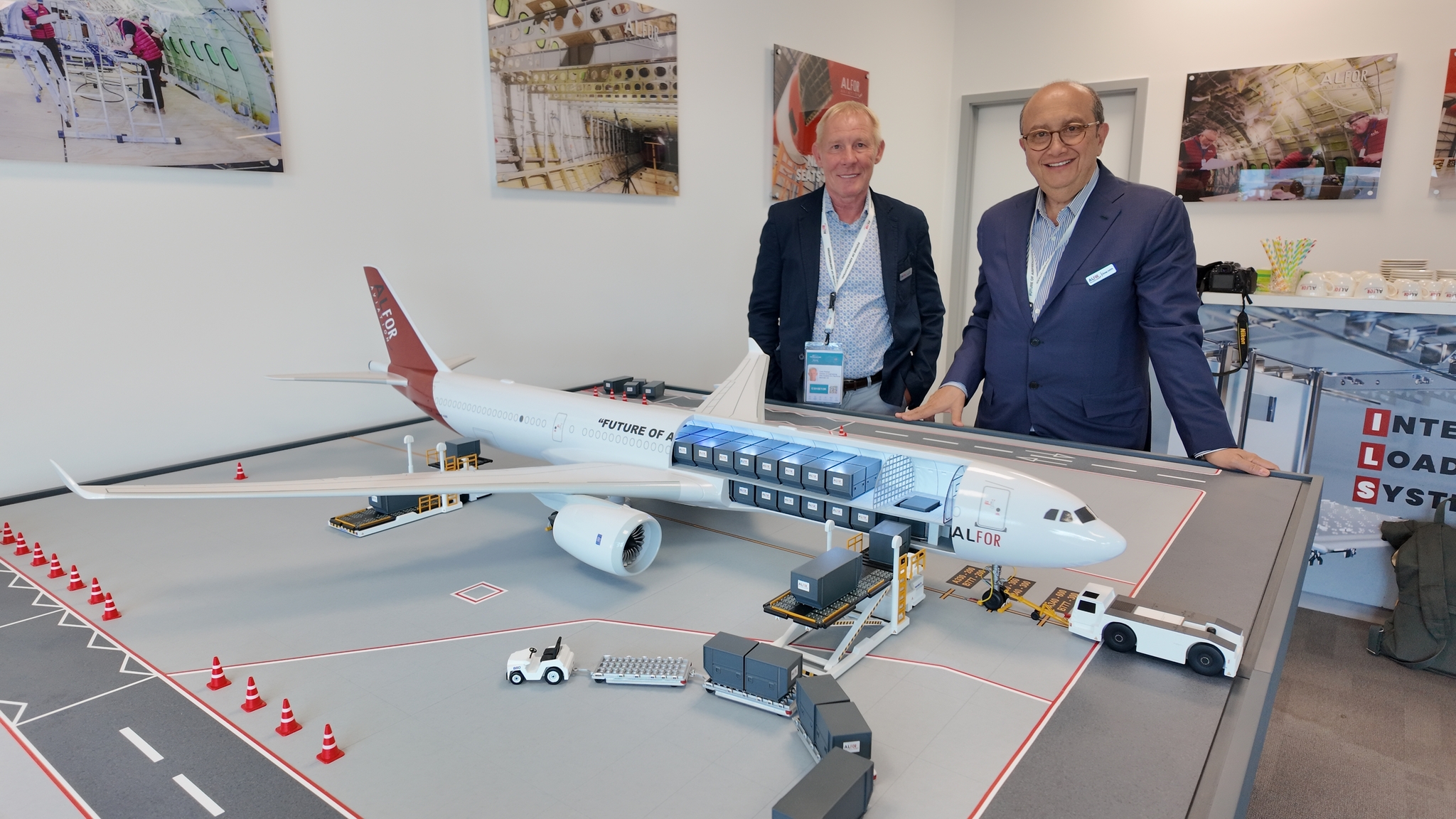
Unlike conventional practice, the ILS conversion concept eliminates the main-deck cargo door entirely. Instead, it lifts ULDs through the aircraft’s existing lower cargo doors and then transports them to the cabin via two elevators installed in the forward and aft sections of the fuselage.
The first aircraft to have this platform will be Alfor’s own, an A330-300 currently undergoing conversion at a subcontracted MRO in Portugal. This installation will serve as proof of concept, running in parallel with EASA STC approval. Flight testing is expected within months, with certification targeted by the end of 2026.
The Conversion Process
The conversion process is fairly straightforward and is expected to take approximately three months.
After the interior is gutted, two holes are opened in the main floor, where a pair of elevators are then installed. The surrounding beams are reinforced, and the cross-beams are replaced by picture frame structures to carry the load.
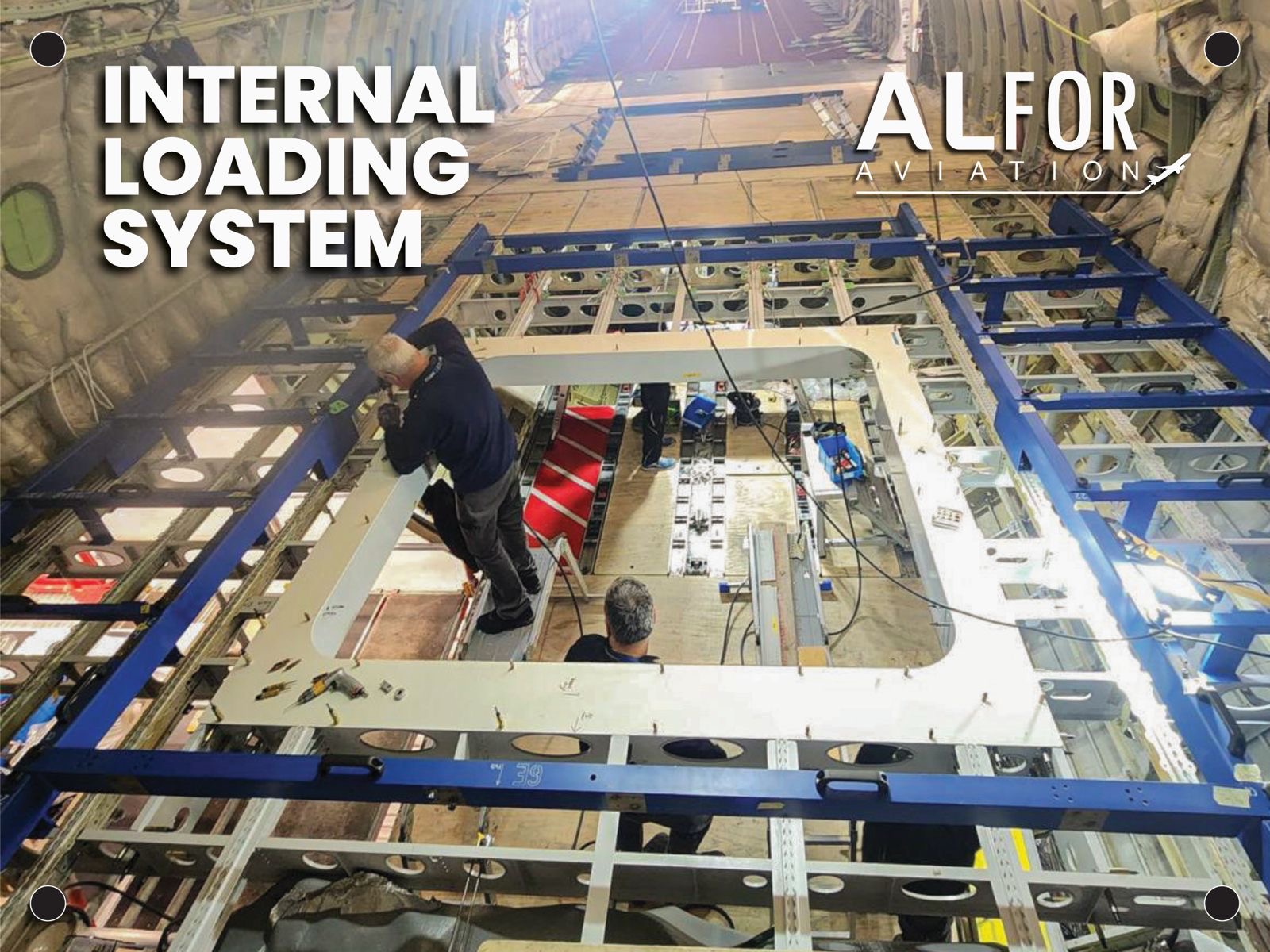
On average, fifteen tons are removed during the dismantling process, and five tons are added through the elevator installation and cabin refurbishment stages. This results in a net loss of ten tons to the aircraft takeoff weight, which can have a positive impact on the aircraft’s range and fuel efficiency.
The Process in Action
When in operation, containers arrive already loaded and sealed at the supplier and are moved onto the main deck without ever needing a main-deck door or dedicated loader. As Omer Mafa, Alfor Aviation’s CEO, put it, this is “not a cargo transporter, it's a container transporter.” It’s an operation that can be “run at every airport where a passenger may fly, without any specific cargo infrastructure and equipment.” He expanded on the subsequent benefits to labor costs: “We reduce the cargo operations on the airfield side where labor, storage and energy are expensive.”
Colin Pritchet, Alfor’s Director of Engineering, said the lift runs on a chain drive with “minimal maintenance required,” and that the team kept “two focuses on safety” throughout development. “On each lift, we have alarms, sirens and flashing lights to warn when the lift is in operation.” Shoot bolts hold each lift in place in flight, and the system is built so that, in Pritchet’s words, “lifts will never see power during flight.”
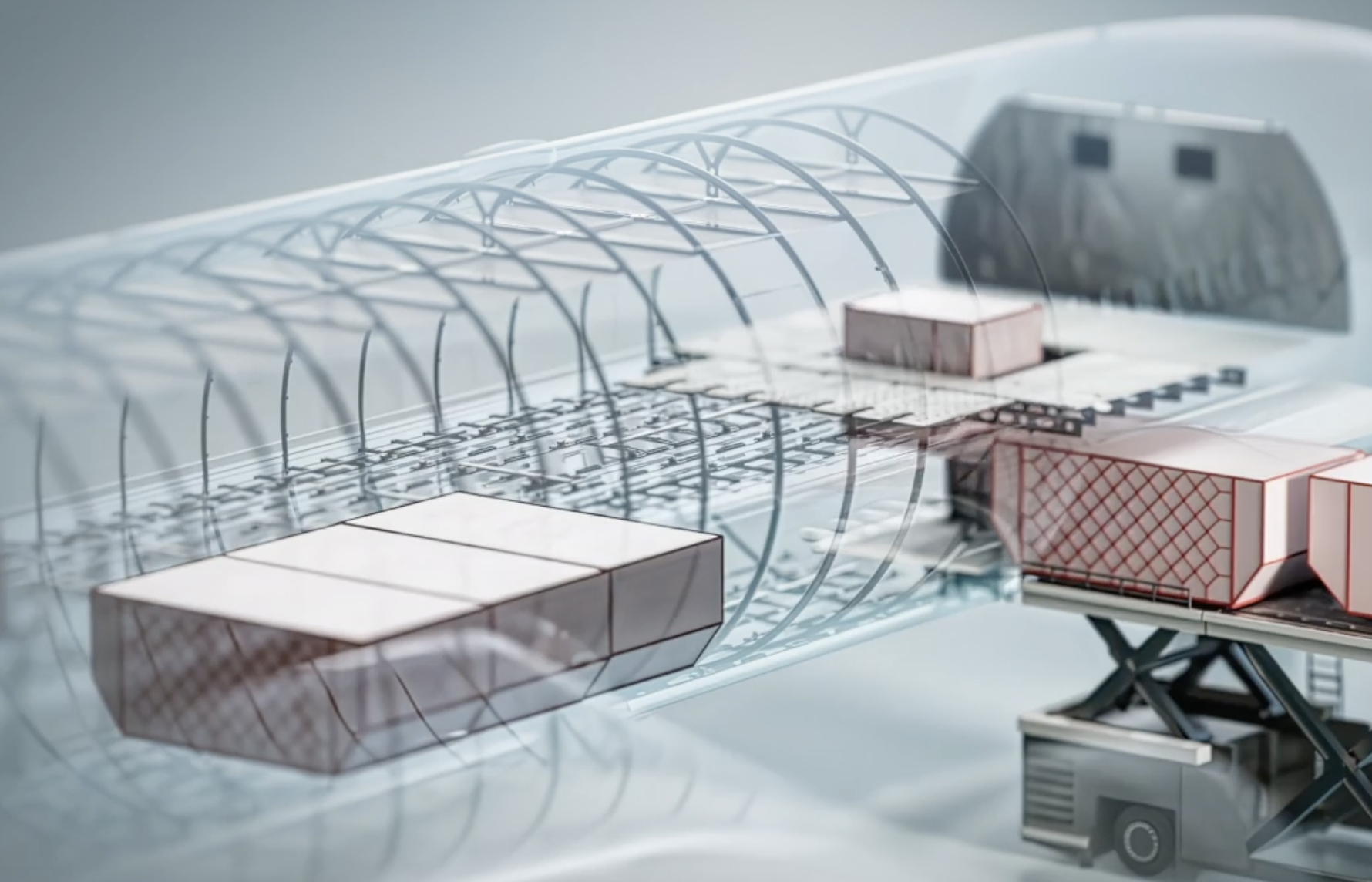
In fact, this is one of the more deliberate features designed to highlight safety as a key consideration for Alfor. The system itself operates through a ground power supply, independent of the electrical systems onboard, which prevents any unwanted movement of the elevators while the aircraft is airborne. The lift has a manual override so that the system can be operated without power, which, as Pritchet notes, is necessary “in the case of a failure [...] just to return the lift to its ‘locked’ position so that the aircraft can fly.”
Why Alfor?
Alfor believes the true value proposition lies in the numbers. Once conversion is complete, this new loading system can load an Airbus A330-300 in less than 60 minutes, with a two-hour turnaround on a fully loaded aircraft using a ground crew of three per lift. This assumes a minimum elevator lifting time of 20 seconds, which the company is still debating whether to reduce. If they do, the company estimates this loading time can be decreased significantly.
The company has also recently announced an agreement with Teesside Airport in the UK to build dedicated conversion facilities, including a hangar for three widebodies and apron space. A single line will support 12 conversions per year, scalable to 36 as demand grows, with customer aircraft expected to enter conversion in Q4 27.
A Long-Term Investment
Alfor is targeting three customer groups: airlines running their own cargo operations, e-commerce cargo operators, and lessors sitting on aging widebodies that no longer justify a traditional conversion. For lessors, the team argues an old aircraft paired with full conversion is often uneconomical, but ILS offers a reasonable alternative.

“People don’t want to invest $10 million in an old aircraft plus $30 million into its conversion process – that’s not realistic,” said Mafa. Rather than scrapping an aircraft down to its main components, Alfor is offering to “convert these assets to cargo [aircraft] without any major investment, [enabling customers to] operate the aircraft for 6 to 10 years more.”
Because loading and unloading are simpler, the company also expects utilization to rise considerably.,
The team also flagged a longer-term advantage: since the lift system isn’t structurally permanent the way a conventional door conversion is, the hardware – tested for one million cycles – can potentially be pulled from a retired aircraft and reinstalled in a new one of the same type, recovering part of the original investment.
The Cockpit’s Next Revolution: When the Co-Pilot Is a Computer
Testing and Certification
Alfor is currently pursuing EASA certification for the A330-200 and A330-300, with additional widebody types under consideration. Pritchet expects FAA approval to follow closely behind EASA sign-off. “If we have EASA approval, FAA approval may be obtained afterwards because they follow the same standards – maybe even Transport Canada,” he said. “Our team of highly experienced engineers are confident of receiving certification – we’re not modifying the outside shape of the aircraft. We don’t touch any of the existing flight controls [...] even the power of the lift is ground power.”
The team was equally direct about the scope of flight testing required. “We expect minimal ground and flight tests,” Pritchet said, describing the processes as simply confirming that systems disturbed during installations function as normal. “It’s not a two-year ground testing or flight testing campaign; this is to show that what we’ve disturbed we’ve put back and it works in the way it had worked before.”
Looking Ahead
For now, the biggest hurdle facing ILS may be its perception by the industry. The team acknowledged that operators tend to be cautious about unproven concepts, no matter how strong the numbers look on paper. "Difficult to say yes, good at the beginning," they said. "Once they start to use it, we believe this will be the new way of doing things."

That confidence also reflects where air cargo is headed. Demand patterns have shifted since the pandemic, with e-commerce and time-sensitive industrial shipping pushing operators toward faster, cheaper capacity rather than another generation of conventional freighters. Alfor's pitch is that ILS answers that shift without asking anyone to give up existing infrastructure or fleets.
As Mafa said: "With this design, we would like to bring a new approach to cargo transportation. It is a win-win combination. The airplanes will fly more, so it's for the benefit of engine manufacturers. Assets will continue to serve more to the benefit of lessors. Operators will have a chance to run more at cheaper costs. There is a win for everybody."
Whether that vision holds will depend on what happens next: EASA certification, flight testing, and ultimately, the first paying customers willing to bet on a genuinely different way of moving freight.
More information about Alfor Aviation and its conversion process can be found on its website: https://www.alforaviation.uk/.
Comments (0)
 Chas C
Ever hear of the Douglas C-124?
Chas C
Ever hear of the Douglas C-124?
Add Your Comment
Recommended Articles
-
 How AI Quietly Became the Backbone of Today’s Aviation Industry
-
 The Shape of Disaster: The Plane That Kept Falling Apart Mid-Air
-
 Only Way Out: Private Aviation in a Region at War
-
 Analysis: How Spirit Airlines Changed Airline Pricing, then Paid the Price
-
 The Cockpit’s Next Revolution: When the Co-Pilot Is a Computer