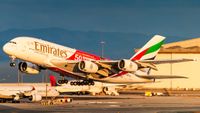
The world's largest passenger airplane — the Airbus A380 Superjumbo — was initially developed to revolutionize intercontinental travel by transporting high volumes of passengers over long distances. However, 20 years later, the A380 has not been the financial success that Airbus hoped it would be.
While the A380 has made a lasting impression on the aviation industry around the world, its high cost of operation, namely due to high fuel and maintenance costs, has caused many airlines to retire their superjumbo fleets earlier than expected. One airline, however, is a clear exception in this case, with its fleet of more than 100 A380s shaping the backbone of its long-haul operations.

Dubai-based airline Emirates is the world's largest operator of the Superjumbo and has expressed intentions of keeping its A380s for many years to come. How does Emirates make the A380 work, and why is it so difficult for other airlines to follow suit?
The Superjumbo’s Biggest Fan
Emirates received its first A380 in 2008, becoming the second airline in the world to fly the Superjumbo after Singapore Airlines. By October 2017, Emirates received its 100th A380, with 42 still on order. 19 of these orders were later canceled. At its peak, Emirates operated 123 A380s in its fleet at once, accounting for 49% of the 251 total A380s that Airbus produced.

Unlock the full story.
Subscribe to keep reading, or read for free with ads (metered).
Learn More or Log in
Comments (0)
Add Your Comment
Recommended Articles
-
 How AI Quietly Became the Backbone of Today’s Aviation Industry
-
 The Shape of Disaster: The Plane That Kept Falling Apart Mid-Air
-
 Only Way Out: Private Aviation in a Region at War
-
 Analysis: How Spirit Airlines Changed Airline Pricing, then Paid the Price
-
 The Cockpit’s Next Revolution: When the Co-Pilot Is a Computer